






The short answer
Yes, a mattress can cause or worsen back pain when it no longer keeps your spine level. The clearest sign is stiffness or aching when you wake that eases within an hour of getting up. Other signs are a visible dip, rolling towards the middle, and sleeping better in a hotel or on another bed. Most mattresses need replacing after about seven to ten years.
Signs your mattress is the problem
Back pain has many causes. These signs point to the bed rather than to you.
| Sign | What it tells you |
|---|---|
| You wake stiff, and it eases after you get up | Your spine was not supported while you slept |
| A dip or body impression you can see | The comfort layers or springs have worn out |
| You roll towards the middle or the edge | The mattress has lost its even support |
| You sleep better on another bed | The difference is the mattress, not your back |
| Springs creak, or you can feel them | The spring unit is past its life |
| You wake hot, or with a blocked nose | Heat build-up, or dust mites in an old mattress |
| It is more than seven to ten years old | Most mattresses have done their work by then |
How to relieve back pain from a mattress
If the mattress is too firm, a soft topper of five centimetres or so adds give for the shoulders and hips. If it is sagging, a topper will not help, because it follows the dip: the mattress needs replacing.
Rotate the mattress head to foot so you are not lying in the same hollow. Check the bed base as well: broken or widely spaced slats let a good mattress sag.
Change how you lie, too. Side sleepers can put a pillow between the knees; back sleepers, one under the knees. Both take strain off the lower back.
Is it better to sleep without a mattress?
For most people, no. A hard floor holds the hips and shoulders up without letting them settle, which leaves the lower back unsupported and presses on the joints. Some people with a very soft, sagging bed do feel better on the floor for a few nights, but that tells you the mattress is too soft, not that the floor is good for you.
If you like a hard surface, a firm mattress gives the same flat feel with enough cushioning to protect your shoulders and hips.
When to replace it, and what to choose
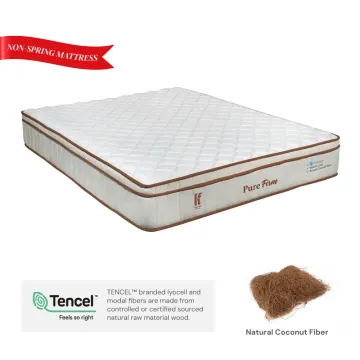
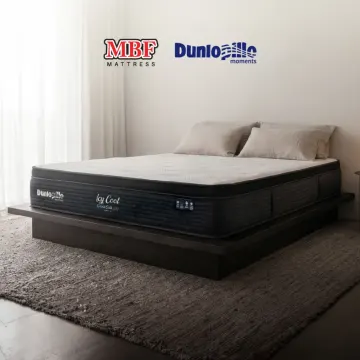
Replace the mattress when you can see a dip, when two or more of the signs above apply, or when it is past ten years old. For most people with back pain, a medium firm mattress with zoned support is the place to start.
This guide is general advice, not medical advice. If your back pain is severe, lasts more than a few weeks, or comes with numbness or weakness, see a doctor or physiotherapist before changing your mattress.
Reading only gets you so far. Come lie on them.
Every brand in this guide is on the floor at our 21 showrooms, and a consultant is a WhatsApp message away.